How Much Are Our Data Worth?
From surveillance capitalism to data sovereignty: exploring the extraction model that turns personal information into corporate profit — and the alternatives emerging to reclaim digital autonomy.


We live in an era marked by accelerated digital transformation, where ownership and control of data have become determining currencies in the distribution of wealth. While the physical world has been regulated over centuries, the digital realm remained a lawless territory, where mega-corporations operate with little oversight and profit from mass extraction of personal information.
This concentration of data in technological conglomerates created deep asymmetries in socioeconomic structures. Companies don't just collect information, they leverage it to consolidate monopolies, stifle competition and limit opportunities for smaller independents. A wealth gap emerged, with systematic barriers to access and innovation.
Data is not merely a revenue stream, it is the resource that dictates power dynamics in our society, right now.
The Surveillance Capitalism Model
Shoshana Zuboff, in The Age of Surveillance Capitalism (2019), documents how personal data stopped serving to improve services and became commoditized by corporations to predict and influence human behavior. The product is not the platform, the product is us. Zuboff describes a new economic system where human experience is freely appropriated as raw material to manufacture predictive products sold to third parties.
Jaron Lanier, in Ten Arguments for Deleting Your Social Media Accounts Right Now (2018), offers an incisive complement. He describes digital platforms as "behavior modification empires" — systems that prioritize engagement, often through polarization, at the expense of collective well-being. For Lanier, these monopolies distort wealth distribution and erode the social fabric by manipulating behaviors and perpetuating inequalities.
Cambridge Analytica Case: Data as Political Weapon
The most visceral example came to light in March 2018. British firm Cambridge Analytica obtained data from up to 87 million Facebook profiles without explicit consent, through the app "thisisyourdigitallife." This data was used to create psychological models and target political ads in the 2016 U.S. presidential election and the Brexit campaign in the UK.
This was not commercial advertising. It was industrial-scale social engineering.
The revelation made by whistleblower Christopher Wylie to The Guardian and The New York Times on March 17, 2018, triggered a drop of approximately $50 billion in Facebook's market value within days. In July 2019, the FTC imposed a record fine of $5 billion on Facebook — the largest penalty for privacy violation in the agency's history. The UK ICO also applied a £500,000 fine for the same case.
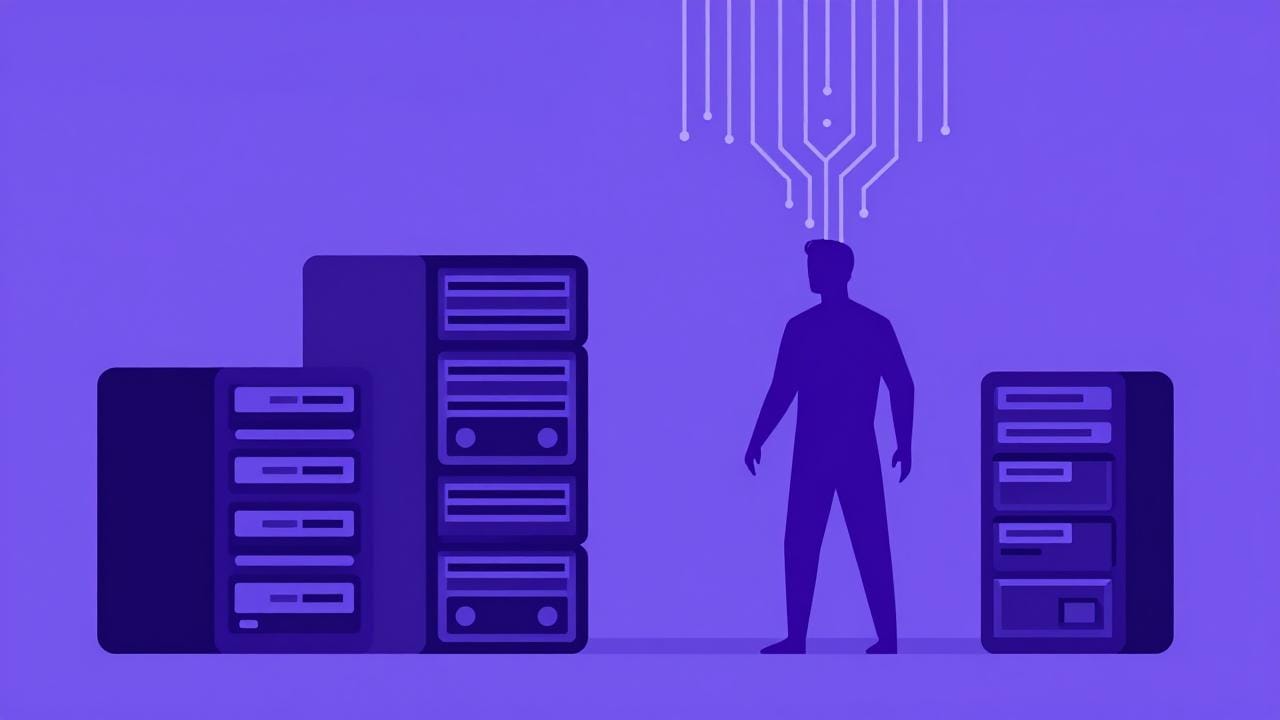 Human silhouette with data being extracted into corporate servers. Minimalist cyberpunk visualization.
The Digital Extraction
The dynamic is repeatable and systemic:
| Stage | Mechanism | Consequence |
|---|---|---|
| Collection | Legibility-challenged Terms + dark patterns | Fabricated consent |
| Aggregation | Profiles cross-linked across apps/devices | Complete behavioral identification |
| Monetization | Sale of predictions, not raw data | Profit concentrated in few shareholders |
| Power | Influence over markets, policies, opinions | Socioeconomic inequality amplified |
This model reproduces familiar extractivist logics: just as natural resources were extracted from colonies to enrich metropolises, today personal data are extracted from users to enrich globalized technological centers.
Paradigm Shift
As these companies deepened their presence in users' lives, exploitation potential and privacy invasion increased significantly. Through complex agreements, data extraction often leaves citizens unaware of the extent to which their information will be used. This lack of transparency opens space for manipulations compromising individual and collective rights.
We face a transversal challenge — crossing social classes, countries, and contexts. Empowerment will arise from understanding the implications of usage policies and data regulations, as well as active societal participation in dialogues about digital rights.
Emerging Alternatives
Resistance is not just theoretical. Practical movements are gaining momentum:
-
Decentralized protocols: The Solid project, created by Tim Berners-Lee (inventor of the World Wide Web) in collaboration with MIT since 2016, proposes a web where users control their own data in personal "Pods." In 2018, Berners-Lee founded Inrupt to build a commercial ecosystem around Solid. The platform is open-source and blockchain-independent.
-
Progressive regulation: The EU's GDPR, in effect since May 25, 2018, established rights like data portability (Art. 20) and right to erasure (Art. 17), with fines up to €20 million or 4% of global revenue. In Brazil, LGPD (Law No. 13.709/2018) entered force in August 2020, inspired by the European model, with sanctions applicable from August 2021. These are important milestones but still insufficient to reverse the power asymmetry.
-
Sovereign tools: End-to-end encrypted platforms with local control, such as Proton, Signal, and Tutanota, offer practical alternatives for those seeking to reduce exposure to the extractivist model.
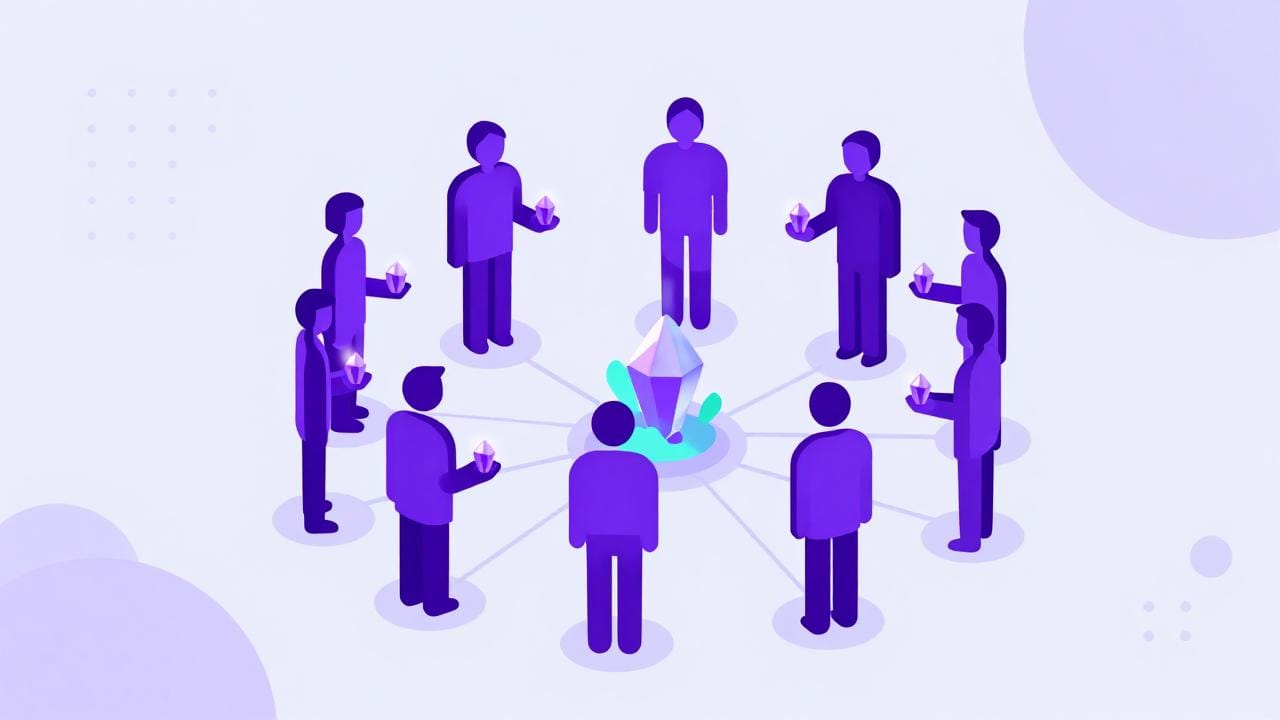 Interconnected nodes forming a protective circle around human silhouettes, symbolizing data sovereignty and collective resistance.
Digital Empowerment as Resistance
The path to challenging these inequalities passes through multiple fronts: technical awareness about what data we share and how, adoption of sovereign tools, political participation demanding stricter regulations and support for cooperative models that return value to data producers.
Data are digital extensions of our experiences, choices and identities. Allowing third parties to monopolize them is allowing them to monopolize parts of our autonomy.
The question is not whether we should resist but how we will build viable alternatives. Technology can both concentrate power and redistribute it. The choice depends on who defines its purpose.
The digital future will not be written by hidden algorithms. It will be written by people who refuse to be treated as free resources.
References & Sources
-
Zuboff, S. The Age of Surveillance Capitalism: The Fight for a Human Future at the New Frontier of Power. PublicAffairs, 2019. — Official site | Wikipedia
-
Lanier, J. Ten Arguments for Deleting Your Social Media Accounts Right Now. Picador, 2018. — Author's official site
-
Cambridge Analytica Scandal — Up to 87 million Facebook user profiles collected without consent. Revealed by The Guardian and The New York Times on March 17, 2018. — Wikipedia | BBC News
-
FTC $5 billion Facebook Fine — July 24, 2019, largest privacy violation penalty in FTC history. — The Guardian
-
Amnesty International — Analysis on Cambridge Analytica and behavioral profiling. — Amnesty.org
-
Solid Project / Tim Berners-Lee — Decentralized web initiative with user-controlled data. — solidproject.org | Inrupt | Wikipedia
-
GDPR (General Data Protection Regulation, EU) — Effective since May 25, 2018. Portability rights (Art. 20) and erasure (Art. 17). — gdpr.eu | Legal text
-
LGPD (Brazil's General Personal Data Protection Law) — Law No. 13.709/2018. Effective since August 2020; sanctions from August 2021. — lgpd-brazil.info | Wikipedia
All the best,
André